
The end of the 2000s was a bad time for genre storytelling, especially genre television. With both Lost and Battlestar Galactica coming to an end about a year apart, the first chapter of a new era of television was ending. These were both shows that benefitted from the rise of social media and the globalizing of water cooler talk following big reveals and plot twists. Mysteries were identified and discussed, symbols and clues found and dissected, and grand theories of the meanings of the shows debated across blogs and message boards and twitter threads. You might think I’m about to say this was a bad time for genre storytelling because the shows themselves failed to pay those mysteries off, to weave the litany of symbols and clues into a satisfying grand unifying theory of the show’s lore. I am not. I come not to praise that view of the impact of those shows, but to bury it.
The closing years of the aughts cemented a change in the popular view of how we are supposed to watch shows, and what kinds of audience expectations should matter to the writers. The point of television, it was decided, was for shows to have A Plan, to follow that Plan as strictly as possible, and to Pay Off every fan theory and mystery with answers that fit within what audiences decided that Plan was on their own, whether it was the show’s intention or not. Simultaneously, despite everything being Planned, these mysteries had to be hard enough to decipher that they could sustain the shows all the way to the end. This view of long-form storytelling has been corrosive not only to the discourse around television, but to the writing of the shows themselves.
A dance began between writers trying to delay mystery reveals as long as possible — so that the debate could serve as the engine of a show’s popularity — and audiences trying to crack the code. These were reveals intended to elude online detective work, while somehow simultaneously matching the expectations fans cobbled together along the way. A decade later, it would lead to its nadir: a second season of Westworld structured entirely around a mystery reveal held until its conclusion (and criticized for being too mysterious and for failing to be mysterious enough), followed by a much stronger season three that largely eschewed mystery entirely to focus on character arcs and cultural themes (and criticized for no longer having a point).
Shows and audiences were now at war, and the conditions of victory were blunt and clear: the audience’s most popular, narrow conceptualization of the series’ goals were empirically the only thing worth satisfying. Whatever the creators were actually trying to do was irrelevant in the face of audience expectations.
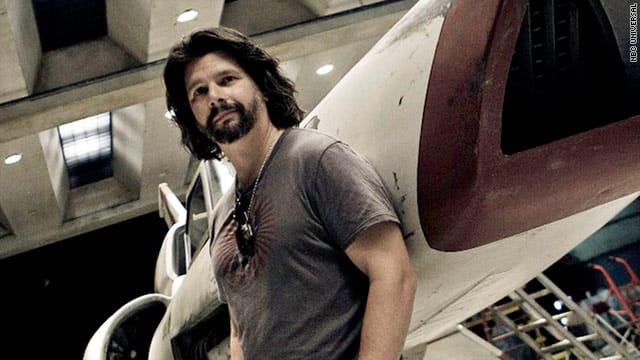
While I wasn’t a Lost viewer when it was airing, I’d been all in on Ronald D. Moore’s 2003 reboot of Battlestar Galactica from the moment the miniseries dropped. I watched that miniseries on a lark, was bowled over by it, and torrented its first season when it cruelly aired on British SkyTV months before releasing in the United States on the Sci-Fi Channel (which would ironically be rebranded as Syfy four days before BSG’s series finale aired, heralding the epochal shift on the horizon). I stayed a fan through the entire run, thrilling as it became increasingly weird in its back half. I listened to Moore’s commentary podcasts, and even hosted a watch party for its finale, “Daybreak”. It remains one of my all time favorite shows.
My wife had never seen it, though, and her only touchpoint were the jokes on The Office about it being such a nerdy property that only a weirdo like Dwight would like it. As part of our long journey of forcing each other to watch things the other loved, we decided that the time for BSG had arrived. It was my first full rewatch since the series aired. I’d returned to individual episodes many times, but the full show? I’d be returning to it after almost two decades. Questions like, “Would it hold up?” and “Will they be really annoyed I pushed this weird nerd show onto us?” were impossible to avoid, but hey, that’s what revisiting beloved works is all about.
I’d largely avoided the theorizing and mystery box analyses of the show when it was airing, and I was sincerely caught off guard when a large chunk of the show’s fandom turned on BSG's final season. People were shocked by the mysticism woven into the conclusion, but hadn’t that been one of the show’s central concepts from the start? The ending was so contentious that even writers as notable as George R. R. Martin were taking swings.
BATTLESTAR GALACTICA ends with "God Did It." Looks like somebody skipped Writing 101, when you learn that a deus ex machina is a crappy way to end a story.
Leaving aside whether Martin’s simplistic critique of the deus ex machina as a narrative device is merited, or even applicable to the show, it most sharply gets to the root of the dissatisfaction people had with “Daybreak” (and even season four as a whole). They expected a scientific, or at least logical, explanation for the until-then inexplicable events we’d seen thus far. The nature of Head Six, the methodology of Starbuck’s resurrection, why the frak “All Along the Watchtower” kept popping up through all of time; people wanted not just answers to these questions, but thorough, concise, science fiction explanations. This was, after all, a military science fiction show, was it not?
As my wife and I began the journey into the show, memories of the response to the finale had me desperately setting up reasonable expectations that I was afraid the show didn’t do a good enough job of cementing: some things would only be explainable through the lens of mysticism, others might be explainable but weird, and there were questions that would not get any real answers at all. The things I deeply loved about the show were too important to me to allow whatever mixed messages people had gotten from Battlestar to get in the way.
It took less than half of the first season for me to realize that it wasn’t the show that had betrayed the audience’s expectations, but the audience that had refused to listen to what the writers were very clearly telling them.
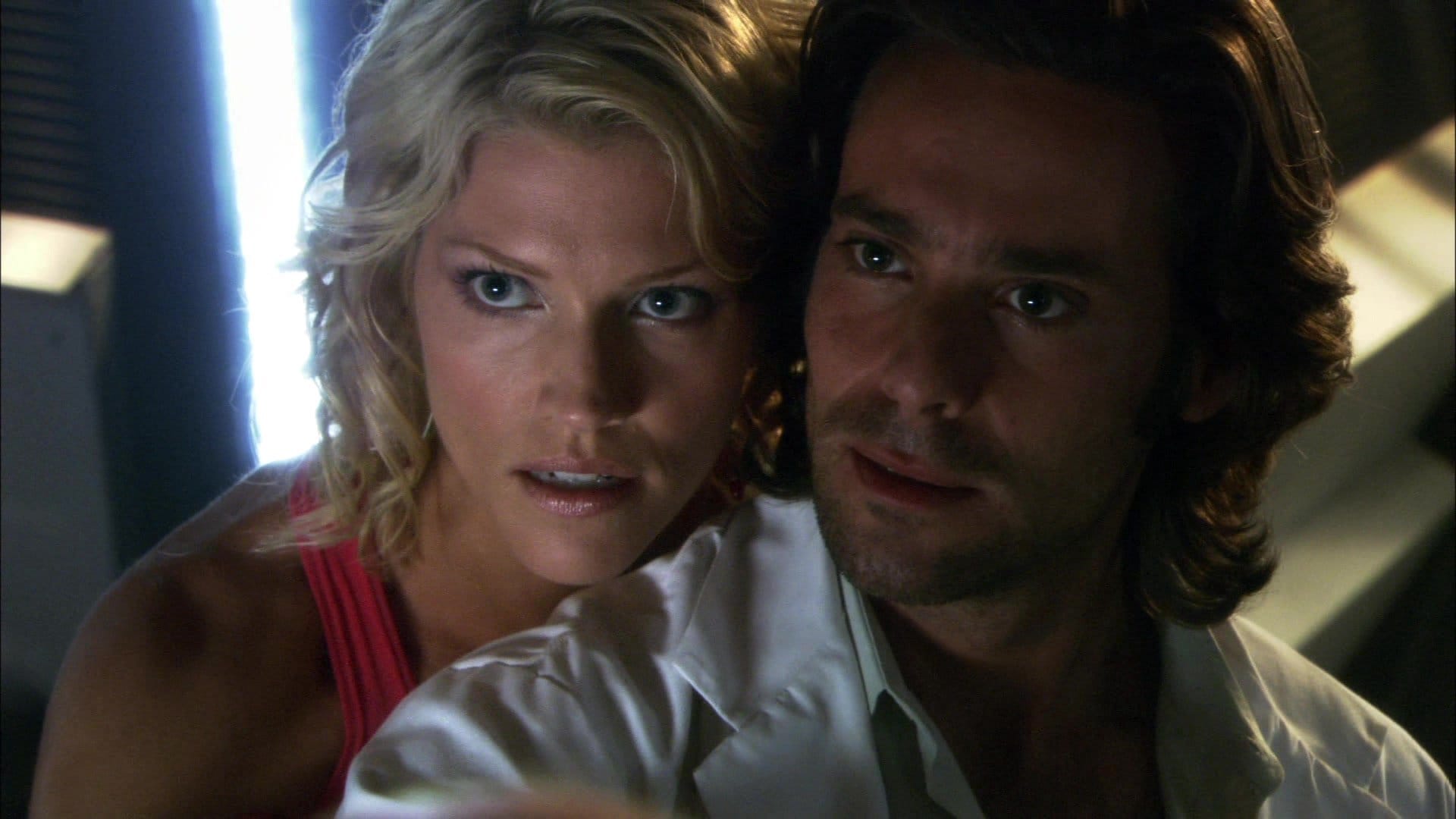
In season 1, episode 7, titled “Six Degrees of Separation”, Gaius Baltar has a crisis of faith. Or rather, he refuses to accept the demands for faith from the persistent vision he’s been having since the destruction of most of the human race. Head Six, as she’d come to be known, took the form of one of the Cylon models, but claimed to be an angel of the one true God, guiding Baltar on a destiny he had no interest in. When he refuses to believe, Head Six vanishes just as a Six posing as a human named Shelly Godfrey arrives on Galactica. Godfrey threatens to reveal Baltar’s complicity in the destruction of the colonies via a No Way Out-style reconstruction of an image of Baltar sabotaging the defense mainframe. Just as Baltar is found out, though, he repents, asking for God’s forgiveness. Godfrey… simply vanishes. The image is proven to be a forgery. Head Six returns, claiming that Baltar’s repentance has saved him.
In the next episode, “Flesh and Bone”, Laura Roslin, president of the colonies, has visions that align with statements of the humans’ destiny made by another Cylon, Leoben, that they’ll find the original home world of humanity, Kobol, and after will find Earth. Later in season one’s “The Hand of God”, Baltar chooses a target for a critical mission with what is either a guess or inspiration from his hallucination of Six — and proves to be correct. This is all just in the first, thirteen-episode season.
At no point, during any of this, is it hinted at or even suggested that there is a scientific explanation for any of this. In fact, in the following season, the lingering possibility that Baltar’s visions are due to a chip in his brain are definitively disproven, and Head Six once again claims to be an angel of God.
At each step, Moore and his team of writers are telling the audience how to watch their show: there are mysteries beyond explanation in this world. These mysteries are tied into a cycle of death and rebirth that has happened before, are happening now, and will happen again. There are forces in this world that defy explanation, and that the importance of these forces to the story are the impacts on the people themselves; the characters attempting to navigate a world where every preconception of what life was going to be has been annihilated.
Galactica is, at its core, a show about being at the mercy of forces beyond one’s control. It begins with a holocaust, the wholesale destruction of human civilization at the hands of their own artificial creations. We follow the few survivors of that tragedy as they grope blindly through the vastness of space, searching for a destined home that few believe even exists, suffering catastrophes and pursuit by the Cylons that destroyed their civilization. The stories told within this structure are often about the attempts to carve out a new existence after the loss of everything they loved and care for. Few of the survivors were even alive for the first rebellion of the Cylons; the disaster is a terrible story from an earlier generation returning out of the mists of legend. The layer of mysticism that carries the show’s story is simply another aspect of this struggle for control in the face of uncontrollable forces.
It’s fair to dislike the mysticism of Galactica, to desire military science fiction absent the religious aspects of the world. It’s equally fair to dislike the execution of those elements, and to find and express tangible critiques of that execution. What’s not tenable is the argument that Galactica ended with a sudden and unprecedented “God did it!” Nor is calling its ending a deus ex machina grounded either in the show itself or the definition of that literary term. The historical use of the deus ex machina, a device that begins in the theater of Ancient Greece, involves external forces bursting into the story at the last minute to resolve the drama. Things like, “Well, this character needs to survive so, hey, here’s Helios coming down off of a crane to whisk Medea away!” A deus ex machina is not any dramatic use of the mystical or divine, but a sudden, unearned, external-to-the-story-to-that-moment force inserting itself into the final moments of the narrative.
Battlestar Galactica is a series that builds a foundation of the inexplicable from the outset, and layers oddity after oddity onto the show from there. It’s a series where a Bob Dylan song switches on four sleeper agents, where a character’s drug-induced visions are revealed to be prophetic, where a character and her spaceship are returned miraculously after their death and destruction.
It’s also a series where all of these things are catalysts for character growth and action. There is an assertion that some divine force has been pushing the humans and Cylons to a new life on Earth, together and in peace, to break the cycle of death and rebirth, but a key story impact of that implication plays out through one character’s belief being expressed a critical moment to deescalate a conflict. Starbuck’s death and resurrection sends her on a journey that ties the recurring theme of “All Along the Watchtower” to the path to Earth, but the show is primarily interested in how it ties into Kara’s desperate need for meaning in her life.
There is no point in the journey of Battlestar Galactica where it’s not being up front and transparent about the nature of its narrative and universe. The writers wanted you to know what story they were telling you. They built it, brick by brick, step by step, so the audience could engage with what they were saying. There comes a point where you, the audience for a creator’s art, have to stop projecting your own desires onto it and be in conversation with what’s actually there. If there had been a last minute scientific explanation for all of its mysteries, that would have been the deus ex machina. Or, I suppose in that case, a machina ex deus.
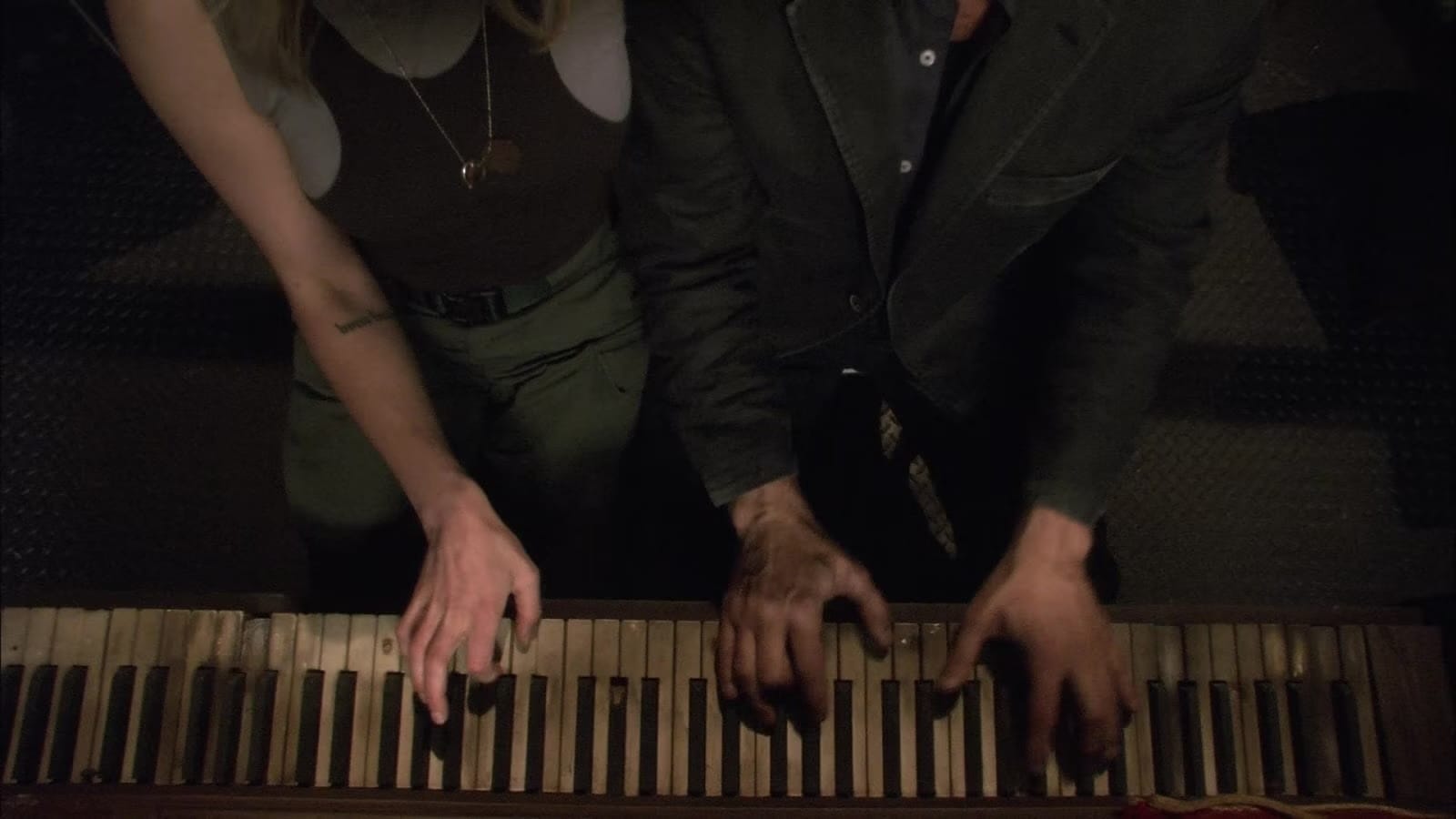
The other cultural current the dissatisfaction with Galactica’s finale is the demand for explanations in general, the view that every mystery is a question that must be answered. I get where this need comes from. When you’re reading a book or watching a show, there are piles of things you don’t understand at the start, and it’s natural to want to be able to put those pieces neatly on a shelf so that you can internalize what it all means. I don’t think it’s unreasonable for audiences to bias towards artists who are, at minimum, aware of the human need to reshape horrific chaos into meaningful patterns. Ironically, the aggressively incomprehensible filmmaker David Lynch understood that desire better than anyone, and built a filmography around forcing audience members to confront worlds where such comforts didn’t exist.
Where things go wrong is when the ability to box everything up into neat packages becomes the metric by which good storytelling is judged. The presence of ambiguity is not a failure of writing. Further, not every mystery is plot. There are times — I’d argue, in good writing, it’s most times — where the uncertainties are meant to resolve through their impact on the characters, the world, and the themes of the story, not by expanding the lore and plot mechanics of the narrative.
Battlestar Galactica is often mocked for opening its first two seasons with a little reel that ends with the declaring the Cylons “have a plan.” The end of the series certainly does not reveal any grand, mysterious plan that the Cylons have been puppeteering through the story. A miss! A mistake! A betrayal!
Only, we do know what the Cylons’ plan was! They tell us most of this in season one: they can’t procreate themselves, and while they fear and despise their creators, they believe that only through procreating with humans can the Cylons evolve. The Cylons’ plan is to wipe out human civilization, and then evolve through the one command they believe God's children are meant to follow that has so far eluded them: to procreate as their creators can. Only then, they believe, can they become the perfect society that humans were incapable of creating. The fate of Athena’s half-Cylon baby Hera is the focus of the Cylons from the moment she becomes pregnant.
We don’t need to stop there, either, because by the end of season two, in “Downloaded”, we get the show’s real interest in the Cylon plan: that it’s a really dumb plan that cannot work. Caprica Six — the Six that had fallen in love with Baltar — and Boomer, who’d also fallen in love with a human during her time as a sleeper agent, call bullshit on the entire enterprise and push forward a massive shift in Cylon society. From the end of season 2 on, the story is quite explicitly about two societies in free fall, locked in a death struggle they can only escape through the one thing neither knows how to achieve: peace and reconciliation.
A series that sees every open question as a plot device to use is, in almost every case, a hollow exercise in mechanics. When the writer’s room was struggling to break “Daybreak”, the series finale, Moore finally came in one day, erased the entire whiteboard, and wrote, “It’s the characters, stupid.” The point wasn’t, and never should be, the Plot. It’s the people. It’s how they feel about the story happening, how it changes them, how they move forward from its resolution. This is, again, and again priority that the series was clear about from its beginning. Is there a single answer about the nature of Starbuck’s resurrection that matters more than the meaning expressed in her final conversation with Apollo, that she’d finally found some measure of peace? Does any mechanical description of why Laura Roslin was having visions add meaning to a story that’s focused instead on her final, dying moments of joy with Adama? Of flying over the vibrant beauty of Earth, knowing that whatever the provenance of those visions, her struggles to keep humanity alive long enough had led them out of the threat of extinction?
If Lost made a critical misstep in its own march to a character-focused finale, it was in doing exactly what the fans demanded: devoting an entire episode to the dull mechanics of the lore in “Across the Sea”. It’s an episode that immediately follows the tragic death of two characters, lopping off the emotional journey we’d been on and forcing a bunch of Stuff on us that the audience demanded, but ultimately found no joy in. The nature of the Island wasn’t the point of the show: the choices the Island forced its characters to make, and the destinations they reached as a result, was. Giving “answers” isn’t a neutral exercise. It’s a focus pull away from other things, and in many cases, risks diminishing the very essence of questions at the heart of those mysteries. Lindelof would go on to his next show and choose a song with the title “Let the Mystery Be” for good reason.

The crisis that hit so much popular culture in the late aughts — with the backlash against the focus on character over plot, and the refusal to accept a creator’s stated intentions — is I think finally passing. It’s been an unpleasant couple of decades watching studios and creators chase fan demands, and to prioritize the elucidation of mysteries over the exploration of the meaning of mystery itself. Show after show suffered late-series declines in viewership and attention when it became clear the creators weren’t interested in walking the impossibly thin line of fueling discourse while never demanding a single audience member receive an answer they dislike.
The crushing dissatisfaction audiences had with the ending of Game of Thrones was an ironic bookend to the movement: while it’s not Martin’s intended ending, Thrones went all-in on Paying Things Off, and in the process, stripped away anything resembling character nuance out of the story along the way. God did not do it in Game of Thrones. Instead, tropey and unearned plot mechanics led the way. Even things that probably will happen should Martin ever finish A Song of Ice and Fire landed with a thud under the grueling race to answers and payoffs that the showrunners forced us through. Where Battlestar Galactica died the way it lived, vibing through weird shit and loving the humans at the story’s heart, Game of Thrones was crushed under the weight of the mechanical storytelling that Martin himself became mired in halfway through his own books, and just kind of gave up as the finish line approached.
That’s what a show betraying itself looks like. It’s not in refusing to give an audience what it’s demanding and staying true to a creative team’s vision, but in the opposite: backing its way into story beats meant to shock or please people who you can’t reliably please anyway. Thrones stopped being what it had taught you to watch. Galactica, on the other hand, only became more bold in what it set out to do the longer it went.
You don’t have to like what a show is doing, but it’s not a writer’s fault when it refuses to change its goals on your behalf.